
Rivaroxaban
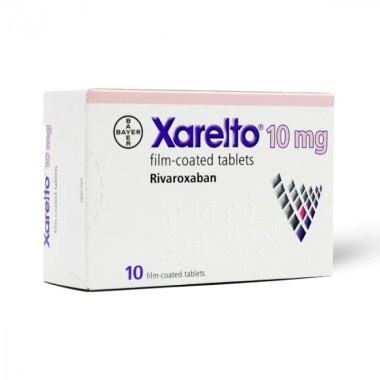
33.00€
Information about Xarelto 10 Bayer Xarelto 10 Bayer contains the active ingredient rivaroxaban, whic..
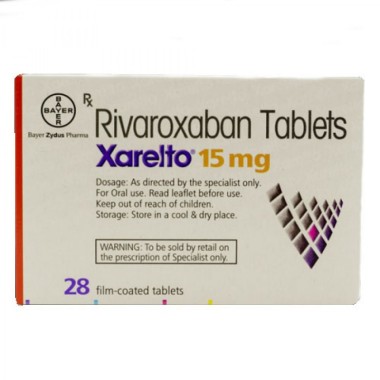
120.00€
Active ingredients of Xarelto 15 Bayer and their properties Xarelto 15 Bayer contains the active ing..
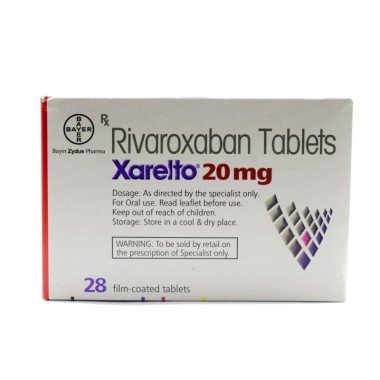
150.00€
Characteristics of the Product Xarelto 20 Bayer is a pharmaceutical product developed by Bayer, prim..
Rivaroxaban — General information
Rivaroxaban is a novel oral anticoagulant (NOAC) that belongs to the class of drugs known as direct factor Xa inhibitors. It was first introduced in the pharmaceutical market and has been extensively studied for its applications in various thromboembolic conditions. The drug functions by inhibiting factor Xa, an essential component in the coagulation cascade, thereby preventing the formation of thrombin and subsequent blood clots. While it is primarily used for medical purposes, discussions around Rivaroxaban in sports and athletic contexts have arisen, particularly concerning its potential role in enhancing performance and recovery. However, it is crucial to emphasize that the use of Rivaroxaban in sports should always be under medical supervision and adhere to relevant anti-doping regulations.
Pharmacological properties
The pharmacokinetics of Rivaroxaban indicate that it exhibits high oral bioavailability, with peak plasma concentrations achieved within three to four hours post-ingestion. The drug is extensively metabolized in the liver, primarily via the cytochrome P450 system, particularly CYP3A4, and is excreted through urine and feces. Rivaroxaban displays a linear pharmacokinetic profile, which allows for flexible dosing schedules, including once-daily regimens for certain conditions. The long half-life of approximately 5 to 9 hours also supports its use in various therapeutic applications where consistent anticoagulation is necessary. While clinical trials have established its efficacy and safety, public information regarding its role in sports performance enhancement remains limited, and athletes are encouraged to research thoroughly before considering the implications of its use.
Indications for the use of Rivaroxaban
Rivaroxaban is indicated for the prevention and treatment of several thromboembolic disorders. It is commonly prescribed to reduce the risk of stroke in patients with non-valvular atrial fibrillation, manage venous thromboembolism (VTE) in surgical patients, and treat deep vein thrombosis (DVT) and pulmonary embolism (PE). Additionally, Rivaroxaban is utilized in patients undergoing hip or knee replacement surgeries to prevent postoperative blood clots. Although the drug possesses unique properties that might appeal to those interested in sports and performance enhancement, it must be noted that such uses have not been clinically validated or endorsed by health authorities. The lack of substantial evidence reinforces the importance of responsible medication use, specifically for athletes who may be considering a Rivaroxaban cycle.
Method of administration
Rivaroxaban is typically taken orally, with or without food. The dosing schedule varies depending on the condition being treated. For instance, in patients with atrial fibrillation, the usual dose is 20 mg once daily, whereas for the treatment of DVT and PE, the recommended initial dose may be 15 mg twice daily for the first 21 days, followed by 20 mg once daily. Given its bioavailability and half-life, ensuring compliance with the prescribed regimen is essential for maintaining effective blood thinning levels. For athletes considering to buy Rivaroxaban, it’s imperative to consult with a healthcare professional and understand the nuances of its administration to maximize therapeutic efficacy while minimizing potential risks.
Contraindications for the use of Rivaroxaban
Rivaroxaban is contraindicated in several scenarios, most notably in individuals with active bleeding disorders or those who have a significant risk of hemorrhage. This includes patients with severe hepatic impairment, advanced renal dysfunction, or those with active gastrointestinal bleeding. Additionally, the use of Rivaroxaban is not recommended during pregnancy unless the benefits clearly outweigh the risks. Individuals with a known hypersensitivity to Rivaroxaban or any of its components should avoid its use. Therefore, athletes must consider these contraindications seriously, particularly in the context of sports and performance, where an increased risk of injury or bleeding could have significant consequences.
Possible side effects
Common side effects associated with Rivaroxaban include bleeding complications, such as bruising, nosebleeds, and gastrointestinal bleeding, which are critical to monitor. Other side effects may include pain in the limbs, swelling, or allergic reactions in some patients. Serious adverse events, although rare, can include major bleeding and thrombocytopenia. Athletes looking to incorporate Rivaroxaban into their regimens should exercise caution and remain vigilant for any unusual symptoms, as early recognition can be crucial in preventing complications. Due to the potential side effects and the implications for athletic performance, a thorough risk-benefit assessment should always be conducted with a qualified medical professional.
Buy Rivaroxaban online on our sports pharmacology website in Ireland
For those interested in buying Rivaroxaban in Ireland, our sports pharmacology website offers a selection of certified products, ensuring quality and reliability. We strive to deliver comprehensive information and reliable customer support to assist our clients with their needs. By placing an order online, customers can conveniently access Rivaroxaban available at competitive prices. Remember to ensure compliance with local regulations and consult with a healthcare provider regarding its use. With discretion and care, you can navigate your options safely and effectively, as you consider potential supplementation in your athletic journey.